What Are Woven Labels? Types, Materials, Weave Structures & Uses
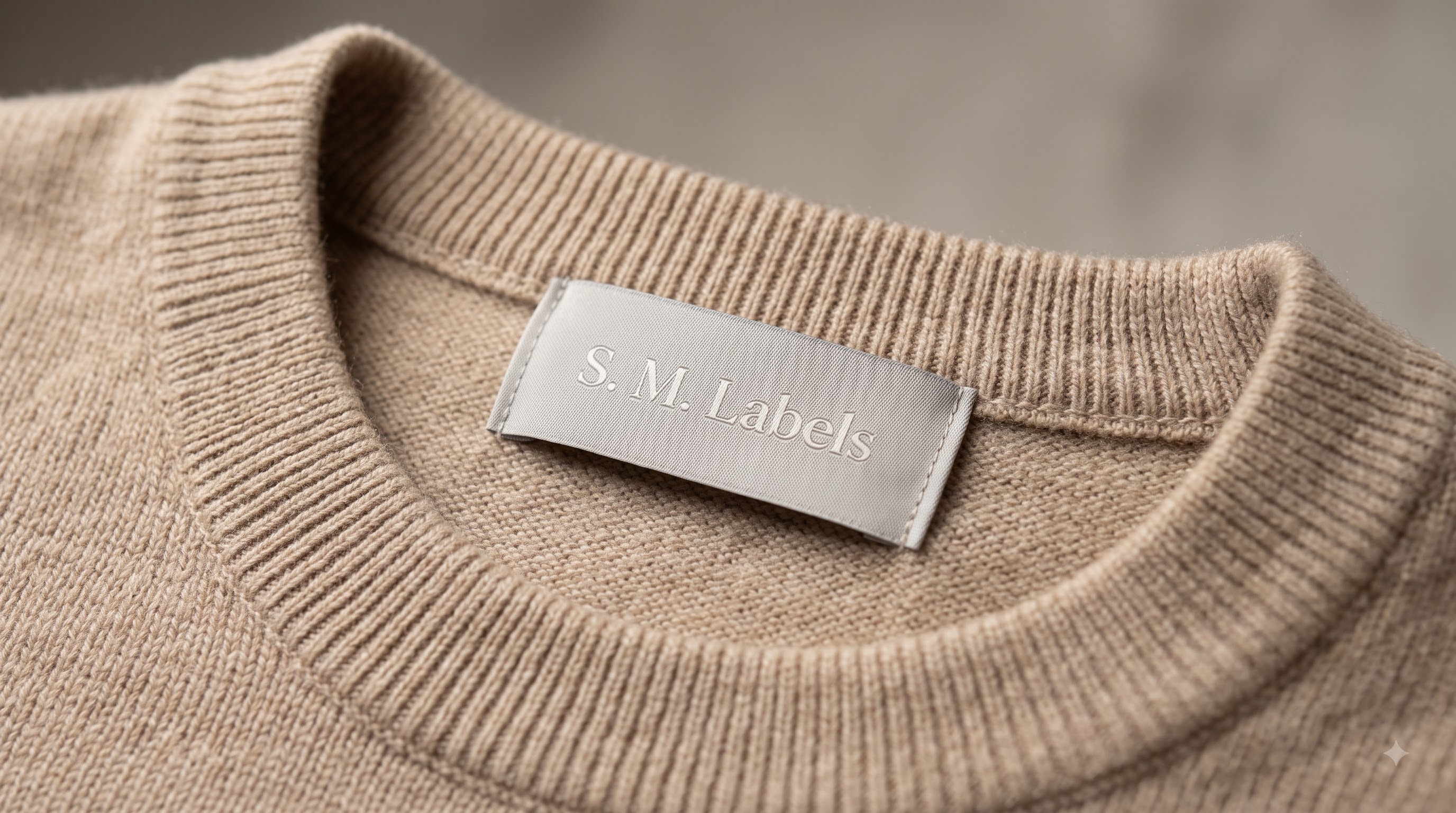
In the textile and fashion manufacturing sectors, a woven label is universally recognized as the gold standard for garment branding. Unlike printed tags where graphics sit on top of the fabric ribbon, a woven label weaves the brand name, typography, and iconography directly into the structural warp and weft of the textile itself.
How Woven Labels Are Manufactured
Woven labels are manufactured on computerized high-speed Jacquard looms. In Jacquard weaving, thousands of individual warp threads running lengthwise are manipulated up and down while weft threads of varying colors pass horizontally across the loom. The interlacing pattern creates both the background fabric and the high-resolution brand graphic simultaneously.
Because the graphic elements are physically constructed from thread, woven labels cannot crack, peel, flake, or fade over hundreds of domestic or industrial washing cycles.
The 3 Primary Weave Structures
1. High-Density Damask Weave
Damask is the industry benchmark for fashion apparel. Woven with ultra-fine 50-denier or 100-denier polyester microfiber threads, damask labels achieve remarkable thread density (often exceeding 120 picks per inch). This allows razor-sharp rendering of tiny typography, serif fonts, and intricate logos, while providing a velvety, matte finish that feels gentle against the wearer's neck.
2. Satin Weave Labels
Satin weave utilizes long thread floats that reflect ambient light, imparting a luxurious, glossy sheen to the label surface. It is exceptionally soft to the touch, making it the preferred choice for lingerie, luxury evening gowns, silk blouses, babywear, and bridal collections.
3. Taffeta Weave Labels
Taffeta uses a plain crisscross weave structure that creates a lightweight, durable, and cost-effective label with a slightly ribbed texture. While it cannot reproduce the ultra-fine detail of 50D damask, taffeta is an economical solution for workwear, canvas tote bags, outer hem tags, and uniform applications.
Edge Cutting: Why Ultrasonic Cutting Matters
Historical complaints about "scratchy neck labels" arose from mechanical cold-knife or hot-wire cutting, which left stiff, abrasive melted edges. At SM Labels' manufacturing plants in Ghaziabad and Ahmedabad, we utilize modern ultrasonic edge-slitting. Ultrasonic sound waves melt the synthetic fibers at microscopic levels, leaving edges as soft as silk with zero fraying.
Common Fold Formats in Garment Production
Center Fold (Loop Fold)
Folded in half horizontally. Stitched into the neck seam, waistband, or side hem. Front displays logo, reverse holds care/origin data.
End Fold
Left and right ends folded inward 5mm to 7mm. The label is sewn flat onto shirt yokes, jacket interiors, and knitwear.
Mitre Fold
Ends folded upward at 45-degree angles, creating two vertical tails that stitch into a neckline seam to form a hanger loop.
Heat-Seal / Iron-On Backing
Backed with heat-activated adhesive film for seamless iron-on attachment to caps, bags, and activewear without stitching.
Pairing with Secondary Trims
A successful garment presentation never relies on neck labels alone. Apparel brands pair woven neck labels with luxury hang tags, interior satin wash care labels, and exterior PU leather patches to form a cohesive brand identity. Explore our complete guide to clothing labels manufacturing in India.
Ready to Order Custom Woven Damask Labels?
Contact our production specialists at SM Labels for yarn shade matching, strike-off samples, and direct factory pricing.